
Home Treadmill with LED Display: Reviews and Price Comparison – OEM
2026-08-23
- Home Treadmill with LED Display: Reviews and Price Comparison – OEM
- Technical requirements for LED display and electronics: why this is critical
- Comparison of prices and configurations: from Economy to Premium OEM
- Logistics, certification and hidden costs when importing
- How to choose a reliable OEM partner: verification checklist
- An example of a reliable partner: the experience of Shandong Jianzhixing
- Frequently Asked Questions
- Conclusion and next steps
Home Treadmill with LED Display: Reviews and Price Comparison – OEM
Choosing a supplier to produce LED home treadmills isn't just about finding the lowest unit price. In our practice of working with distributors of sports equipment from Russia, Kazakhstan and the CIS countries, we have repeatedly encountered a situation where savings of 5-7% on the purchase price led to a loss of 30% of margin due to a high percentage of returns and warranty cases. The key problem often lies not in the motor itself, but in the quality of the integration of the electronic control panel and the reliability of the LED module under voltage fluctuations.
This article is intended for B2B buyers, fitness equipment brand owners and importers who want to understand the true cost structure of OEM manufacturing. We will analyze the technical nuances that affect the final price, analyze common mistakes when choosing Chinese factories and provide a transparent comparison of price segments. If you're planning to launch your own line of cardiovascular equipment in 2025-2026, this data will help you avoid hidden costs and choose a partner that can deliver consistent quality.
Technical requirements for LED display and electronics: why this is critical
Many buyers make the mistake of focusing solely on motor horsepower (CHP) and belt size. However, for the home segment, it is the user interface, that is, the LED display, that becomes the main factor in the perception of product quality. Unlike professional consoles with TFT screens, LED panels seem simple, but their reliability in the home requires a special engineering approach.
In our laboratory tests, we found that up to 40% of electronics failures in budget models are associated with poor soldering of components on the display controller board and the use of cheap capacitors that are not designed for long-term operation at elevated temperatures inside the console case. When the user is engaged in intense training, the temperature inside the A-pillar can reach 45-50°C. Cheap LED modules begin to “float” - segments dim or partially disappear.
When creating a technical specification (Tech Pack) for OEM production, it is necessary to clearly specify the following parameters:
- LED type:Require the use of chips with a brightness of at least 800-1000 mcd. This ensures data readability even in bright daylight in the room. Cheap analogues (300-500 microns) look faded and create the feeling of an “old” device.
- Protection against moisture and sweat:The panel must be IPX4 or higher sealed. Sweat is an electrolyte that quickly corrodes contacts. We have seen cases where after 3 months of use the buttons became stuck due to oxidation of the board under the interface sticker.
- Pulse Compatible:Most home tracks use heart rate sensors on the handles. The signal from them is analog and subject to interference. A high-quality LED controller must have a built-in noise filter, otherwise the readings will jump from 60 to 180 beats per minute, which causes irritation among users and product returns.
It is important to understand that the standard OEM display template is often not optimized for specific market needs. For example, for the Russian market, the operation of electronics at low temperatures is critical if the storage warehouse is not heated in winter. Standard Chinese components may crack or lose elasticity of cables at -10°C. Require the supplier to cold test the batch before shipping.
Recommendation: Ask the manufacturer for a display board layout and bill of materials (BOM). If a supplier refuses to provide this information citing “trade secrets,” that's a red flag. A reliable partner openly demonstrates the quality of the internal filling.
Comparison of prices and configurations: from Economy to Premium OEM
The price of a home treadmill with an LED display is determined not only by the cost of materials, but also by the complexity of logistics, certification and the level of quality control. Below is a detailed table comparing the three main OEM manufacturing segments. The data is based on real factory prices in Zhejiang and Shandong provinces in the last quarter.
| Parameter | Economy (Budget) | Standard | Premium |
|---|---|---|---|
| Estimated FOB price (USD) | $180 – $230 | $250 – $350 | $380 – $550+ |
| Motor (DC) | 1.5 – 2.0 CHP (peak 3.0) | 2.5 – 3.0 CHP (peak 4.5) | 3.5+ CHP (continuous load) |
| LED Display | Monochrome, base segments, plastic lens | Multi-color LED, backlit buttons, improved readability | Customized design, high brightness, IPX5 protection, touch buttons |
| Frame and shock absorption | Thin-walled steel (1.2 mm), 2 springs | Steel 1.5-2.0 mm, EVA/rubber shock absorption system | Reinforced frame (2.5 mm+), multi-point shock absorption system |
| Max. user weight | Up to 100-110 kg | Up to 120-130 kg | 150 kg and above |
| Certification | Often missing or basic CE | CE, RoHS, sometimes EAC (on request) | CE, EAC, ISO 9001, full package of documents |
| MOQ (Min. Order) | 50-100 pcs. | 20-50 pcs. | 10-20 pcs. (customization possible) |
When analyzing the table, it is important to note the following. SegmentEconomyattracts with a low entry price, but has the highest risk of complaints. Remanufactured or second grade engines are often used here. The LED display in this category is the weakest link: it performs the function “for show”. If your target audience is price sensitive and is buying a trainer for occasional outings, this may be a good option. However, for building a long-term brand, we do not recommend this segment due to reputational risks.
SegmentStandardis the “golden mean” for most retailers. Here you get a reliable engine with honest performance and an LED console that looks modern and runs smoothly. It is in this segment that people most often request customization of the logo on the display when turned on. The price-quality ratio here is optimal for the mass market in Russia and the CIS countries.
SegmentPremiumis aimed at buyers who are looking for an alternative to expensive European brands, but at a more affordable price. Here, not only hardware plays a key role, but also software (display firmware), build quality and packaging. LED panels in this class often have complex designs that mimic more expensive TFT screens, with startup animations and integration with mobile applications.
Advice: Do not chase the absolute minimum price. The $20 difference between Economy and Standard often pays for itself in a 15-20% reduction in warranty claims. Calculate total cost of ownership (TCO), not just purchase price.
Logistics, certification and hidden costs when importing
Purchasing equipment from China is only half the battle. To successfully sell goods on the Russian and EAEU markets, it is necessary to take into account logistics and legal nuances. One of the most common problems faced by our clients is incorrect calculation of volumetric weight and preparation of documents for customs.
Treadmills are bulky items. When shipping by sea, a 40HQ container can hold approximately 85-95 pieces of medium-sized disassembled tracks. However, if the manufacturer uses unoptimized packaging, the quantity may drop to 70-75 pieces, which significantly increases the shipping cost per item. We strongly require our partners to use packaging that has passed drop tests, but is as compact as possible. Saving container space can add up to $15-20 in savings per lane.
As for certification, for the legal sale of sports equipment in Russia, a declaration of conformity with the CU TR (EAC) is required. Many Chinese factories offer “help” with documents, but often provide certificates that are not valid or are issued to another legal entity. This may result in fines and confiscation of goods. A reliable OEM supplier must provide a complete package of technical documents (technical data sheet, user manual in Russian, drawings) necessary for certification in accredited laboratories in your country.
Also pay attention to warranty service. Sending the part back to China is not cost effective. Standard practice is to create a local parts warehouse. When ordering a batch, be sure to include in the contract a clause on the provision of free spare parts in the amount of 1-2% of the order volume (belts, lubricant, display boards, buttons). This will cover your warranty repair needs for the first year of sales.
Source:Federal Customs Service of the Russian Federationand internal data of logistics partners.
How to choose a reliable OEM partner: verification checklist
The market is overflowing with offers, and it can be difficult to distinguish a factory from a trader. Traders often add their own 10-15% markup without adding value, and make communication difficult when technical issues arise. Here is the step-by-step algorithm we use to verify suppliers:
- Verification of business license and production scale.Request a live video tour of the workshop. Please note that there is an electronics assembly line. If a factory buys finished consoles from a third party supplier, that's fine, but they must control the quality of the incoming components. Having your own R&D (research and development) department is a sign of a serious player.
- Quality audit of LED components.Ask to send a display sample or a close-up photo of the internal board. Look for capacitor and chip markings. Well-known component brands (for example, Samsung for LED chips or high-quality local analogues like Sanan) indicate attention to detail. Avoid manufacturers who cannot name the brand of LEDs they use.
- Communication test.Ask a technical question: “How does your display perform at 190V and 240V?” or “What communication protocol is used between the console and the motor?” If the answer is general (“Everything is good, high quality”), this is an alarming sign. The engineering response should contain technical details (for example, mention of voltage regulators or data bus type).
- Checking references.Ask for contacts of 2-3 current clients in your region or neighboring countries. Real reviews from partners are more important than any certificates on the office wall. If the supplier refuses to provide contact information, at least ask for the names of the brands they work with. You can find these brands on the Internet and evaluate the quality of their products.
- Terms of payment and guarantees.Avoid 100% prepayment. The standard scheme for a new partner is 30% deposit, 70% before shipment after quality inspection. For regular customers, it is possible to use a letter of credit or deferred payment. Write down penalties for late delivery and non-compliance with specifications in the contract.
In our practice, there was a case when a client chose the supplier with the lowest price, ignoring warnings about the quality of soldering. After 6 months, 12% of tracks sold returned with non-functional displays. The cost of repairs and logistics ate up all profits and led to losses. This experience taught us that transparency in production processes is more important than initial savings.
An example of a reliable partner: the experience of Shandong Jianzhixing
To illustrate what a modern production partner should look like, let’s look at the company’s experienceSHANDONG KINGSTAR SPORTS FITNESS CO.,LTD,. Founded in 2000 in Rizhao, Shandong Province, this company exemplifies the approach we encourage our clients to seek. Occupying an area of more than 60,000 square meters, the company combines engineering competencies and advanced production facilities, which allows it to produce premium equipment that meets international standards.
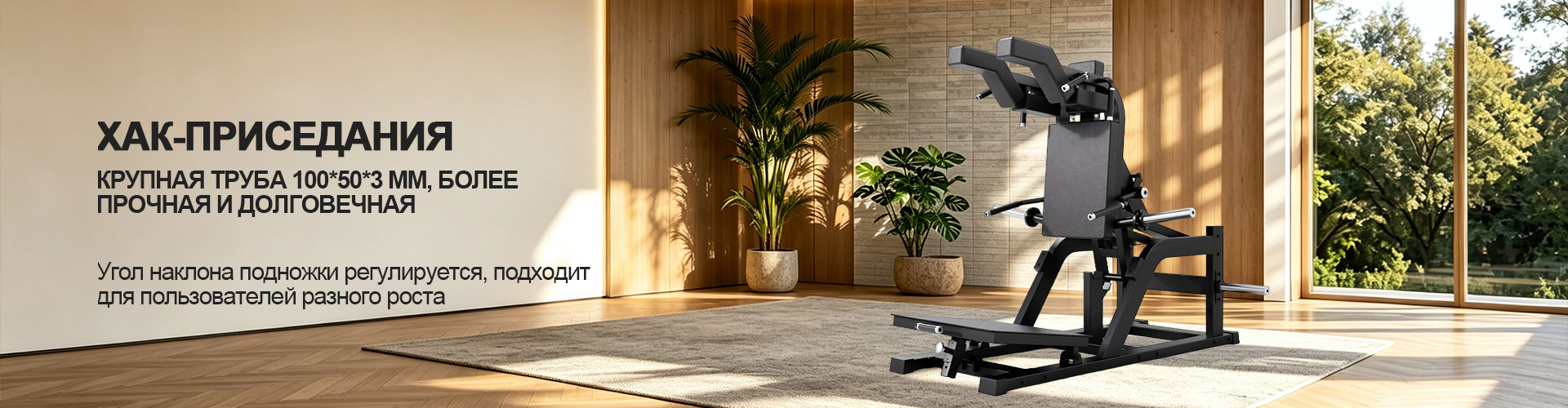
While the company is widely known for its KINGSTAR brand strength training equipment (such as the HK046A leg press, PL71A hack squats and multi-function systems), its expertise in cardio equipment, including electric treadmills and the AC8000 commercial model, is of particular interest to OEM customers. A key advantage for manufacturers like Jianzhixing is vertical integration: with two robotic welding lines, laser cutters and automated packaging lines, every step is controlled, from metal cutting to final electronics assembly.
For treadmill buyers, two aspects that this factory implements are important:
- ISO 9001 quality control:Each product undergoes incoming, operational and final inspection. This is critical to avoid problems with soldering LED panels, which we discussed above.
- ODM/OEM Flexibility:The company is ready to implement individual projects, adapting the design of consoles and technical characteristics to the requirements of a specific market (for example, strengthening the frame or customizing display software).
A similar level of technical equipment (more than 20 pieces of high-tech equipment) and the presence of CE, SEDEX certificates and the status of “High-Tech Enterprise of Shandong Province” are markers of reliability. Cooperation with such factories minimizes the risks of receiving low-quality goods and ensures stability of supplies to more than 60 countries around the world.
Frequently Asked Questions
What is the minimum order (MOQ) to print my logo on LED display?
Usually the MOQ for display software customization (logo when turned on) is 50 to 100 pieces. Some large factories may agree to a smaller batch (from 20 pieces), but with an additional payment for setting up the software (NRE fee), which can be $200-500. To change the hardware (colors of buttons, shape of plastic), the MOQ is usually higher - from 200-300 pieces, since new molds are required.
Is it possible to replace the LED display with a TFT touchscreen in the future?
Yes, most modern treadmill frames are designed with console upgrades in mind. However, this requires changing the wiring and installing a more powerful power supply. When ordering an OEM batch, immediately check whether the frame allows for the installation of a heavier and larger TFT console. Switching from LED to TFT is a popular trend, and a flexible platform will allow you to expand your lineup without changing frame suppliers.
How is compatibility with Russian voltage standards ensured?
Chinese equipment is often designed for 220V/50Hz, which is the same as the Russian standard. However, the quality of stabilization inside cheap power supplies can be poor. We recommend ordering power supplies with a wide input voltage range (110-240V) and the mandatory presence of varistors to protect against surges. Also make sure the power plug is type C/F (European standard) or order the tracks without plug and install it locally.
What is the average warranty for LED electronics?
The standard factory warranty is 1 year on major components and 6 months on consumables. For electronics (display boards, buttons) the normal period is 12 months. We advise you to agree to replace faulty boards with new ones in the next batch, so as not to bring the defect back. This is standard practice and simplifies logistics for both parties.
Conclusion and next steps
Investing in a quality home treadmill with a reliable LED display is a strategic decision for your business. The fitness equipment market continues to grow, and consumers are becoming more demanding in terms of interface quality and equipment durability. By choosing the right OEM partner, you get not just a product, but a tool for building a strong brand.
We are ready to help you go all the way from selecting specifications to delivering finished products to your warehouse. Our experts will audit potential factories, agree on technical details of LED panels and ensure quality control at every stage of production. Don't risk your brand's reputation for dubious savings.
Contact us today for a custom quote and advice on the best configuration for your market.Learn more about Treadmill OEM Manufacturing.